

For readers who prefer to own a shareable digital edition and direct access to the ongoing work.
Includes:
• Full PDF book and ePub
• Printable Timing Checklist (email Contact Us for latest version)
• Access to future updates
• Direct invitations to upcoming timing studies
Shareable. Downloadable. Evolving.
If this resonates, feel free to share it. Timing affects more of us than we realize.
"Confirming to some, illuminating to others." — Amazon reviewer, on the first book in the series
My mother had her stroke on December 23rd. By March she could walk. She could speak. She remembered everyone she was supposed to remember. By every measure the clinical system uses, she was doing well.
What she had stopped doing was reading the books she used to argue with. Suggesting plans for the weekend. Finishing my sentences before I got to the end of them. She was still there. The forward pull that had organized her life — the felt sense that today was connected to tomorrow — was gone.
The neurologist had no name for that. The standard literature calls it post-stroke apathy, or normal aging, or depression. None of these names quite fits, and the absence of a better one closes the inquiry that might have led somewhere. So the inquiry stops, the way it stops in millions of households every year.
I had a name. I had been studying this exact phenomenon for years before it came for my mother. Two months after her stroke, on February 28th, it came for me.
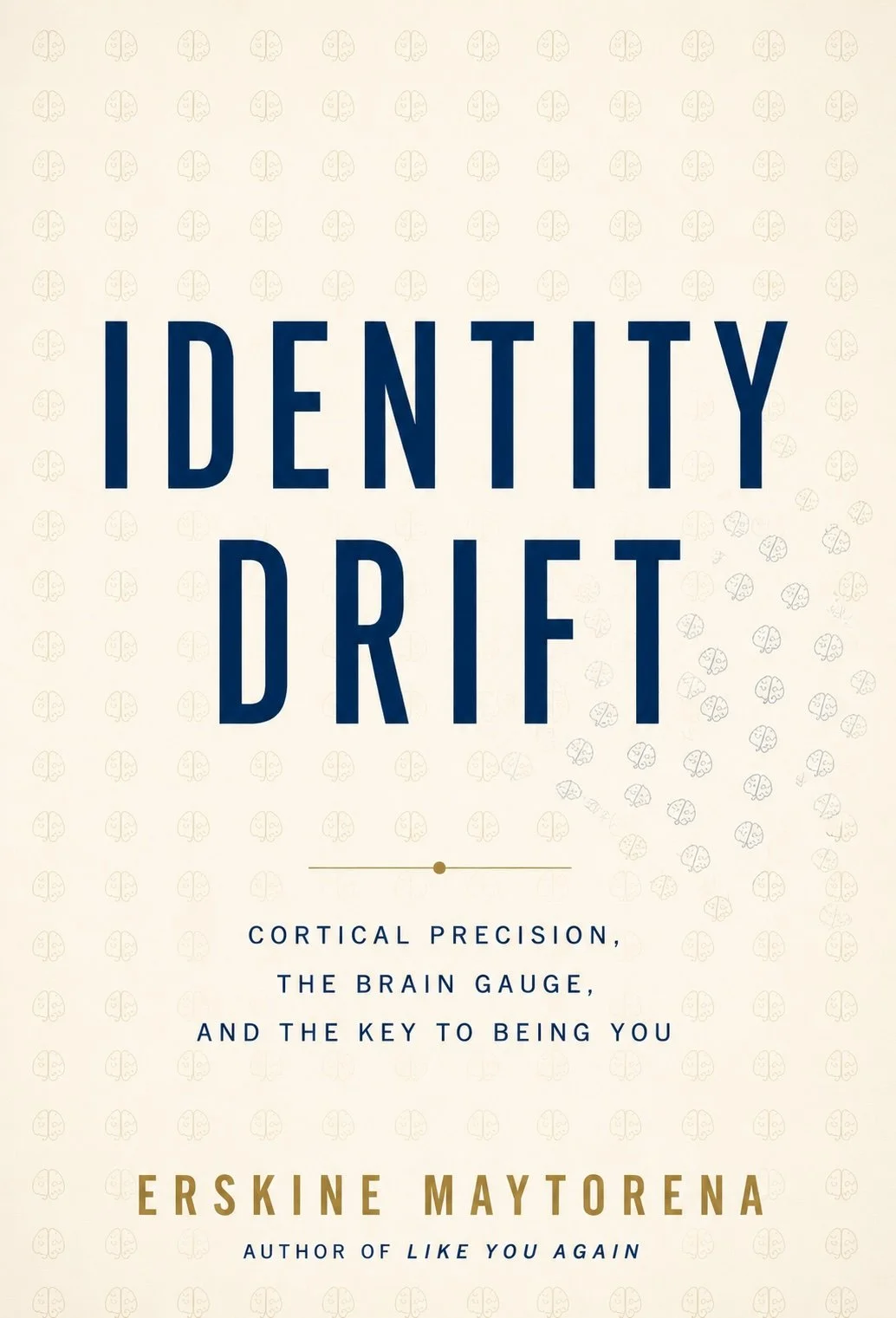
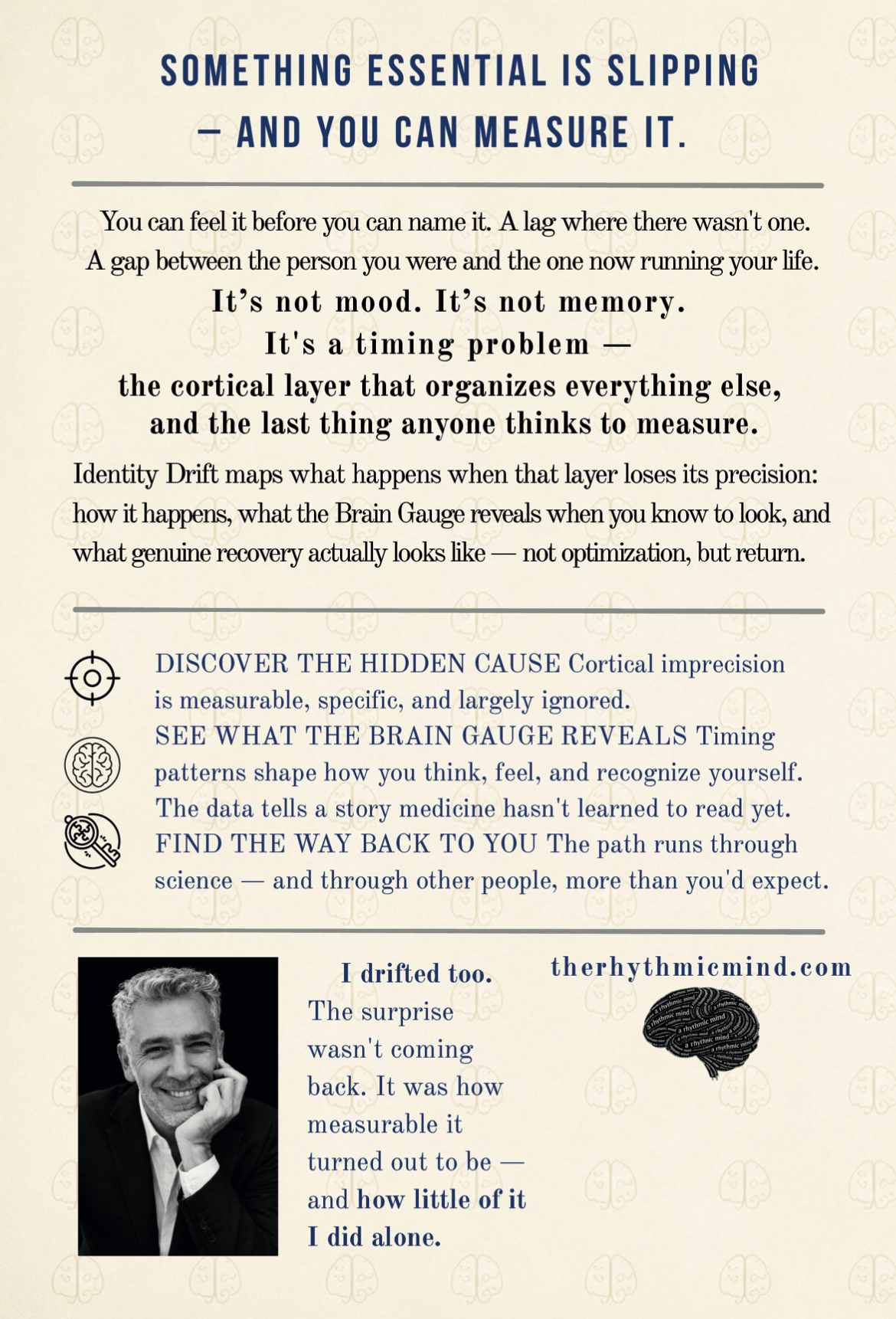
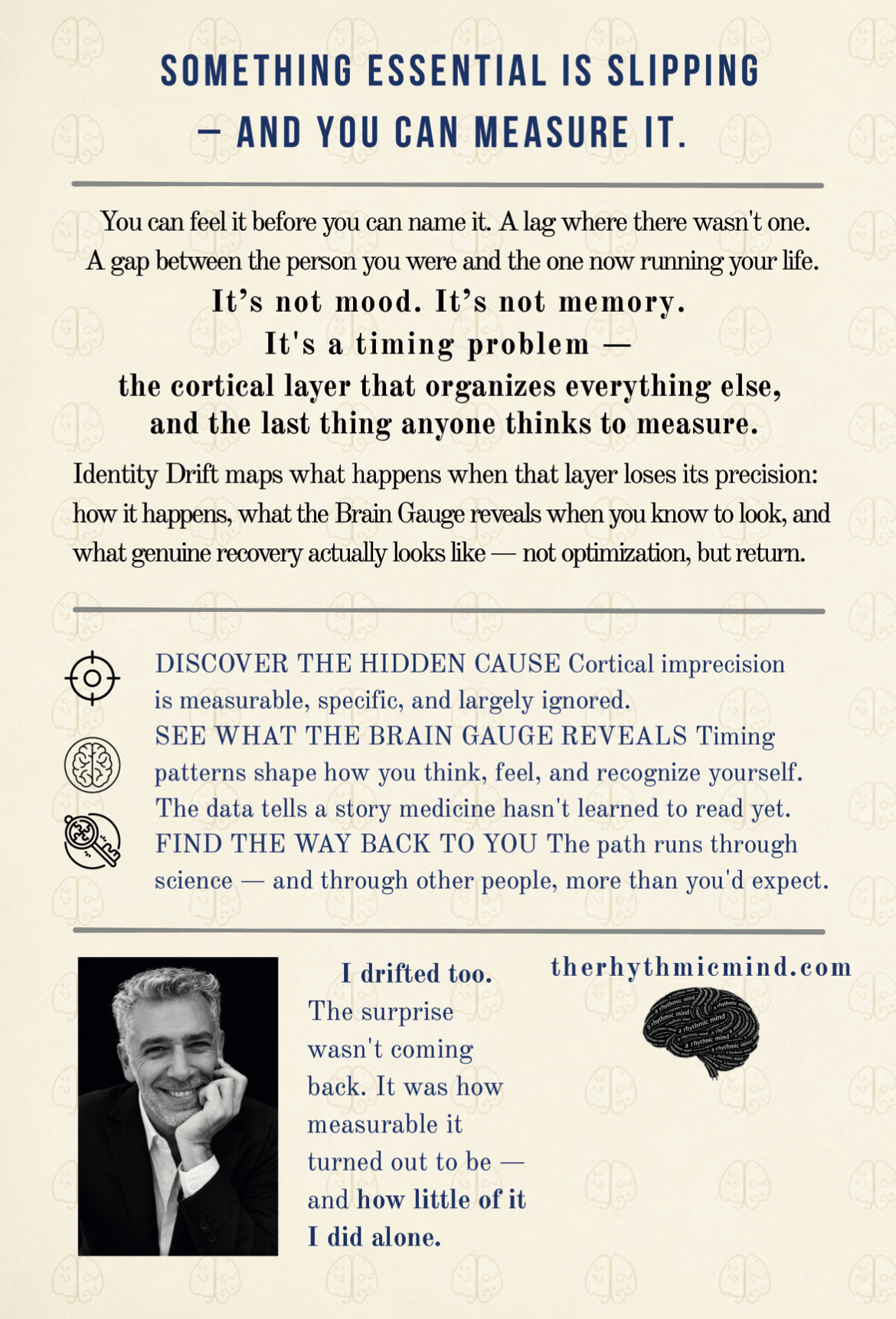
Identity Drift is what I wrote from inside both recoveries.
It is about Temporal Drift — the loss of the felt connection between what you are doing now and what it might produce next. About what disrupts it (more events than the clinical literature recognizes), what the standard instruments cannot see (the timing layer beneath behavior), and what becomes possible when the right framework is in the room.
You will read about a 400-millisecond fact that no dementia patient has ever crossed, and what happens when one does. About a fourteen-day Brain Gauge protocol that returned my mother to a level she had been at almost a decade earlier. About the audiobook I played in recovery whose meaning came back in four and a half minutes, and what those minutes showed me about the plasticity window I was inside.
The book is for the caregiver who has been applying the wrong instrument — their own intact timing — to what they are watching. For the person in drift who knows what they used to care about and cannot feel the pull of any of it. For the clinician working with categories that do not quite fit.
It is the second in a series. The first, Like You Again, introduced the framework. This one applies it under the pressure of two simultaneous recoveries and adds what the application taught me about the gap between knowing the framework and surviving it.
If you have been watching someone become quieter, and no one has had a name for it, this book is the name. The name is where the work begins.
"Reading Like You Again felt like someone finally turned a light on in that darkness. What Erskine Maytorena offers is not just information. It is recognition" — Amazon reviewer, parent of a brain injury survivor
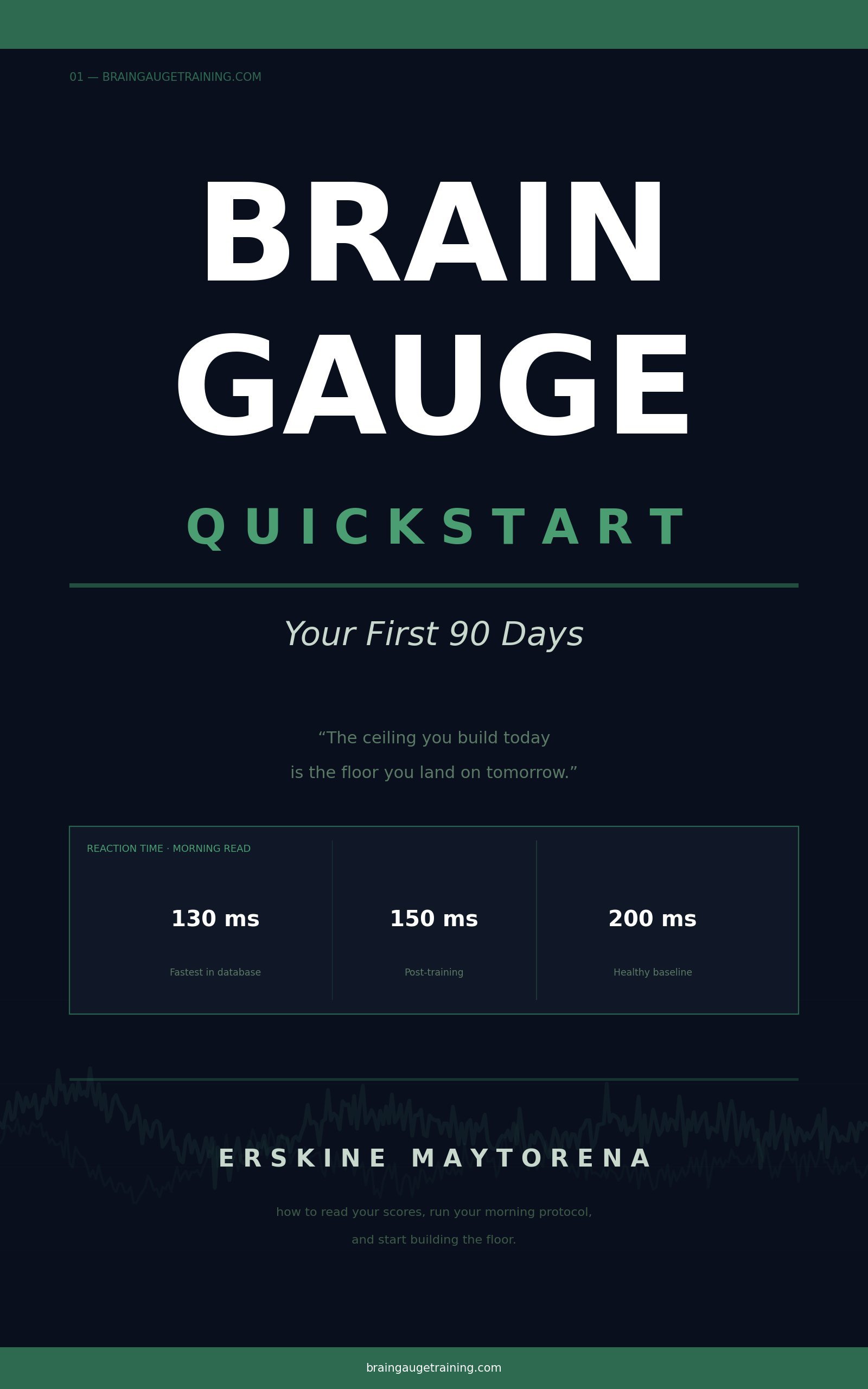
The Brain Gauge came with instructions. Brain Gauge Quickstart is what comes after.
This is the practical guide for anyone who owns a Brain Gauge and wants to know what their scores actually mean — and what to do about them tomorrow morning, and the morning after that.
In five short chapters, you'll learn how to:
Run the morning protocol — a fifteen-minute warm-up and a ninety-second reading that shows how your cortex actually arrived today
Read all eight metrics — Speed, Focus, Accuracy, Timing Perception, and the rest — in plain language, and know which numbers to track first
Train with the Brain Gauge Gym the way an athlete trains: progressive load, consistent sessions, real recovery
Understand the Cortical Ceiling — why the timing precision you build now becomes the floor you stand on as you age
Recognize when a score is pointing to something a standard medical test would miss
It isn't a manual and it isn't a textbook. It's the map: about forty pages, everything you need for your first ninety days with the device — written by an independent researcher who trains with one every morning.
The ceiling you build today is the floor you land on tomorrow. This book is where you start building it.
For educational purposes only; not medical advice. Brain Gauge is a product of Cortical Metrics. This is an independent guide, not affiliated with or endorsed by Cortical Metrics. This is an ePub file: if you prefer a PDF, please contact us.
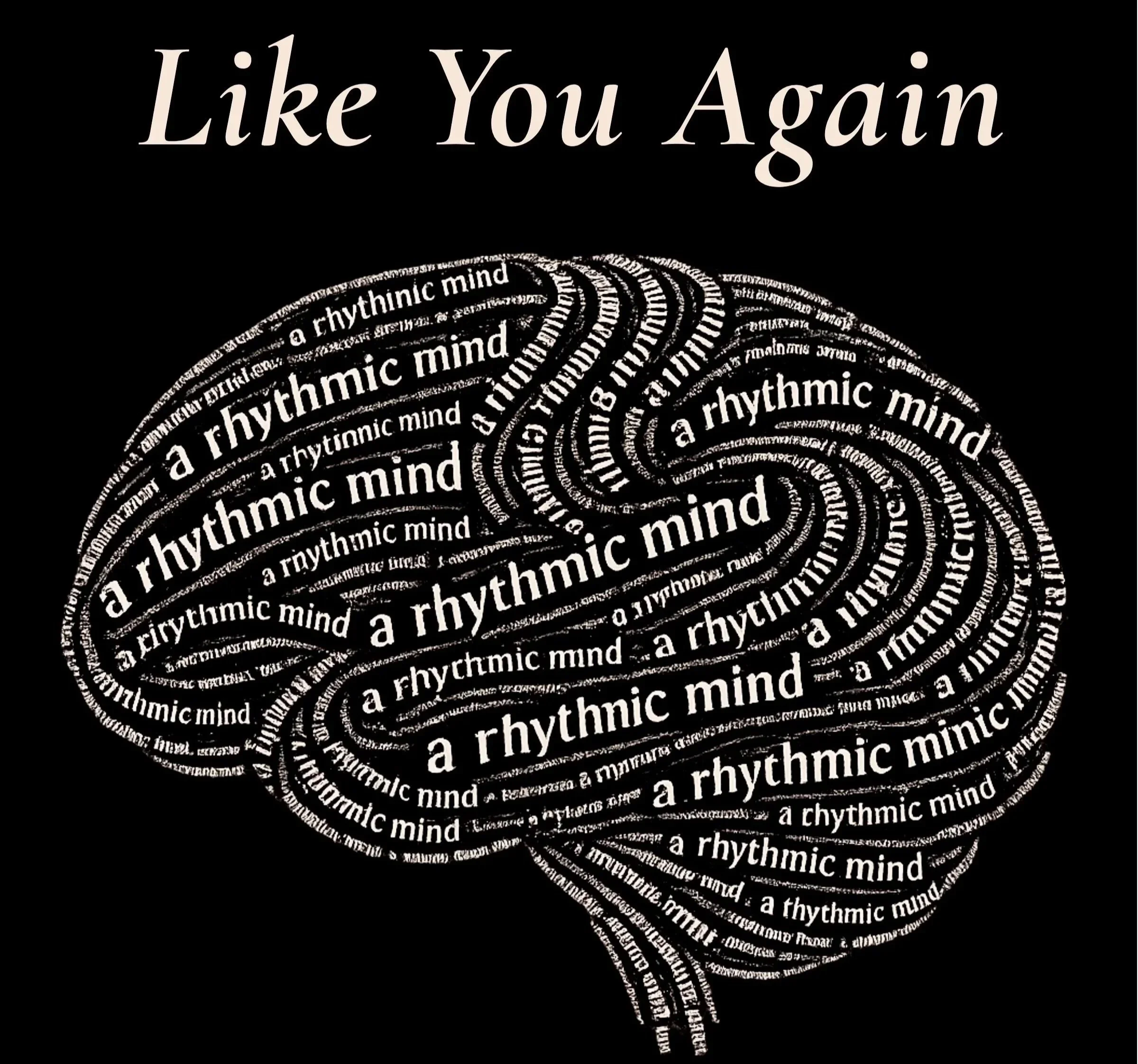
Soft back copy. A physical reference for understanding and restoring timing in daily life. Includes shipping and handling.
The fog. The hesitation. The confusion. The subtle sense that you are running half a beat behind your own life.
For many people, cognitive decline does not begin dramatically. It begins quietly — in missed words, slower reading, awkward movement, diminished confidence. After concussion, illness, stress, stroke, or simply age, something fundamental feels altered. Not intelligence. Not personality. Something deeper.
Timing.
In Like You Again, Erskine Maytorena introduces a new concept: Timing Identity Collapse — the idea that when the brain's internal timing mechanisms falter, the structures built on top of them begin to destabilize.
Reading slows. Reactions hesitate. Memory fragments. Movement feels uncertain. Gradually, the sense of self begins to shift.
Drawing from neuroscience research on temporal processing, predictive coding, and sensory integration — along with his own documented recovery from neurological disruption — Maytorena argues that timing is not a minor skill but a foundational neural substrate. The invisible architecture beneath cognition, coordination, and identity.
Many people are told their symptoms are psychological, stress-related, or "just aging." Standard evaluations often miss millisecond-level timing disruptions that fall below diagnostic thresholds yet still affect reading fluency, speech pacing, motor coordination, emotional regulation, and decision speed.
Instead of asking, 'What's wrong with me?' this book invites a more precise question: 'What has shifted in my internal timing?'
The book includes a 28-day timing recalibration program built around validated cortical metrics — not vague lifestyle advice, but measurable changes in how the brain processes time.
For people who have spent months or years being told nothing is wrong, that loss accumulates. Confidence erodes. Relationships strain. Work suffers. The person you were before begins to feel like someone you used to know.
If you have felt not broken, but off — not incapable, but mistimed — what feels like losing yourself may simply be losing tempo.
And tempo can be trained.
"Confirming to some, illuminating to others." — Amazon reviewer, on the first book in the series
My mother had her stroke on December 23rd. By March she could walk. She could speak. She remembered everyone she was supposed to remember. By every measure the clinical system uses, she was doing well.
What she had stopped doing was reading the books she used to argue with. Suggesting plans for the weekend. Finishing my sentences before I got to the end of them. She was still there. The forward pull that had organized her life — the felt sense that today was connected to tomorrow — was gone.
The neurologist had no name for that. The standard literature calls it post-stroke apathy, or normal aging, or depression. None of these names quite fits, and the absence of a better one closes the inquiry that might have led somewhere. So the inquiry stops, the way it stops in millions of households every year.
I had a name. I had been studying this exact phenomenon for years before it came for my mother. Two months after her stroke, on February 28th, it came for me.
Identity Drift is what I wrote from inside both recoveries.
It is about Temporal Drift — the loss of the felt connection between what you are doing now and what it might produce next. About what disrupts it (more events than the clinical literature recognizes), what the standard instruments cannot see (the timing layer beneath behavior), and what becomes possible when the right framework is in the room.
You will read about a 400-millisecond fact that no dementia patient has ever crossed, and what happens when one does. About a fourteen-day Brain Gauge protocol that returned my mother to a level she had been at almost a decade earlier. About the audiobook I played in recovery whose meaning came back in four and a half minutes, and what those minutes showed me about the plasticity window I was inside.
The book is for the caregiver who has been applying the wrong instrument — their own intact timing — to what they are watching. For the person in drift who knows what they used to care about and cannot feel the pull of any of it. For the clinician working with categories that do not quite fit.
It is the second in a series. The first, Like You Again, introduced the framework. This one applies it under the pressure of two simultaneous recoveries and adds what the application taught me about the gap between knowing the framework and surviving it.
If you have been watching someone become quieter, and no one has had a name for it, this book is the name. The name is where the work begins.
"Reading Like You Again felt like someone finally turned a light on in that darkness. What Erskine Maytorena offers is not just information. It is recognition" — Amazon reviewer, parent of a brain injury survivor
No results match your search. Try removing a few filters.
