
Works
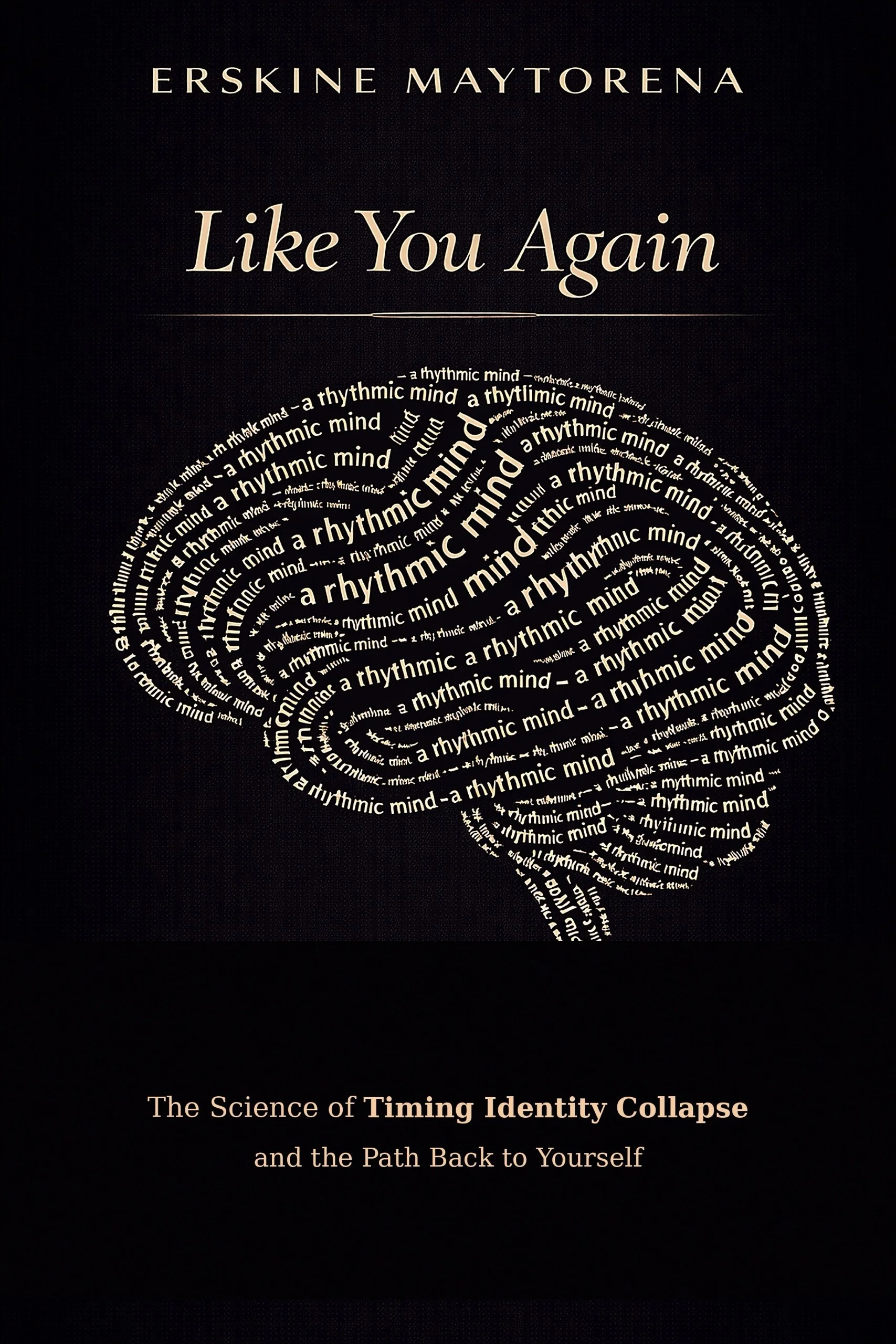
Like You Again
The Science of Timing Identity Collapse and the Path Back to Yourself
There is a particular kind of loss that doesn't show up on any test.
Reading becomes effortful. Conversations move too fast. The things that once came naturally — focus, coordination, the easy rhythm of a familiar day — require effort they never required before. Nothing is dramatically wrong. Everything is subtly off.
This is not aging. This is not weakness. This is timing collapse — and it has a mechanism, a name, and a path back.
What This Book Is
Like You Again began with a question I couldn't answer: why, after a TBI and a spinal cord injury, did I feel like myself in every way except the one that mattered? I was slow, but I could think. I was hesitant, but I could speak. I was confused, but I could move. But I couldn't read, couldn't track a conversation, couldn't find myself inside the rhythm of my own life.
What I found in recovery wasn't a single diagnosis. It was a pattern. Timing goes first — and when it goes, everything built on top of it goes with it. Identity. Presence. The certainty of knowing who you are.
This book names that pattern Timing Identity Collapse, traces it through decades of peer-reviewed research in temporal processing, sensory gating, predictive coding, and motor entrainment, and offers a structured path back through the 28-Day Timing Reset Program—a framework grounded in the same neuroscience, designed for real people with or without specialized equipment .
Who This Book Is For
For anyone who has experienced a TBI, concussion, long COVID, burnout, chronic stress, or neurological disruption and feels like themselves—but not quite.
For practitioners who want a framework that connects cortical timing research to lived performance.
For performers, athletes, and educators who have always understood rhythm as something more than metaphor.
For the skeptic who wants the science before the story. It's all here.
What You'll Find Inside
A clear explanation of what timing collapse is, why it happens, and why it is so frequently misidentified as something else. A four-week program to rebuild internal rhythm. A scientific appendix for readers who want to examine the research directly. And a personal narrative that makes the science impossible to forget.
A Note on Scope
This book discusses timing as a measurable, trainable variable — not a diagnosis. It does not replace medical care. It is the resource I needed and couldn't find when I needed it most.