
 Image 1 of 2
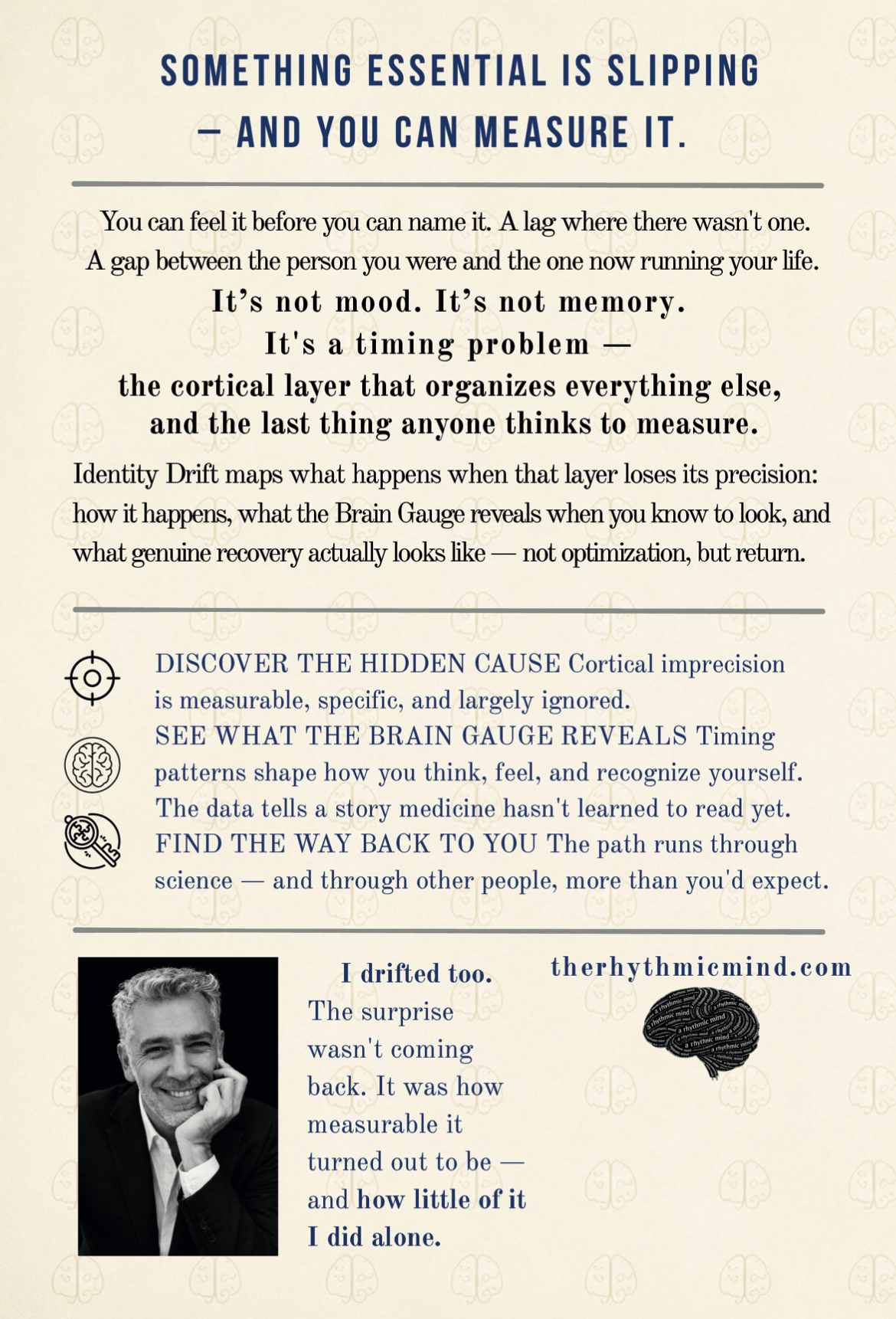 Image 2 of 2
"Confirming to some, illuminating to others." — Amazon reviewer, on the first book in the series
My mother had her stroke on December 23rd. By March she could walk. She could speak. She remembered everyone she was supposed to remember. By every measure the clinical system uses, she was doing well.
What she had stopped doing was reading the books she used to argue with. Suggesting plans for the weekend. Finishing my sentences before I got to the end of them. She was still there. The forward pull that had organized her life — the felt sense that today was connected to tomorrow — was gone.
The neurologist had no name for that. The standard literature calls it post-stroke apathy, or normal aging, or depression. None of these names quite fits, and the absence of a better one closes the inquiry that might have led somewhere. So the inquiry stops, the way it stops in millions of households every year.
I had a name. I had been studying this exact phenomenon for years before it came for my mother. Two months after her stroke, on February 28th, it came for me.
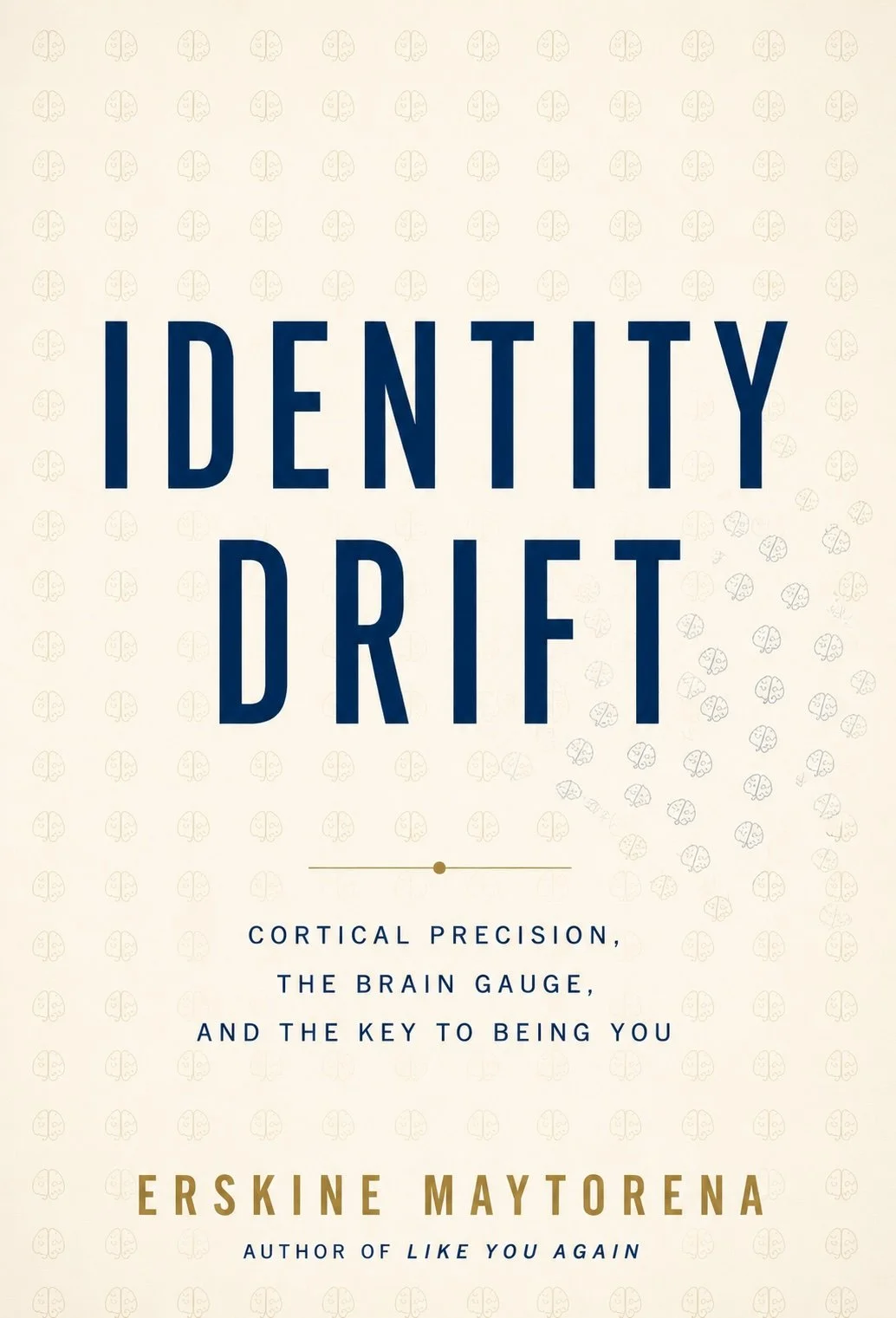
Identity Drift is what I wrote from inside both recoveries.
It is about Temporal Drift — the loss of the felt connection between what you are doing now and what it might produce next. About what disrupts it (more events than the clinical literature recognizes), what the standard instruments cannot see (the timing layer beneath behavior), and what becomes possible when the right framework is in the room.
You will read about a 400-millisecond fact that no dementia patient has ever crossed, and what happens when one does. About a fourteen-day Brain Gauge protocol that returned my mother to a level she had been at almost a decade earlier. About the audiobook I played in recovery whose meaning came back in four and a half minutes, and what those minutes showed me about the plasticity window I was inside.
The book is for the caregiver who has been applying the wrong instrument — their own intact timing — to what they are watching. For the person in drift who knows what they used to care about and cannot feel the pull of any of it. For the clinician working with categories that do not quite fit.
It is the second in a series. The first, Like You Again, introduced the framework. This one applies it under the pressure of two simultaneous recoveries and adds what the application taught me about the gap between knowing the framework and surviving it.
If you have been watching someone become quieter, and no one has had a name for it, this book is the name. The name is where the work begins.
"Reading Like You Again felt like someone finally turned a light on in that darkness. What Erskine Maytorena offers is not just information. It is recognition" — Amazon reviewer, parent of a brain injury survivor
"Confirming to some, illuminating to others." — Amazon reviewer, on the first book in the series
My mother had her stroke on December 23rd. By March she could walk. She could speak. She remembered everyone she was supposed to remember. By every measure the clinical system uses, she was doing well.
What she had stopped doing was reading the books she used to argue with. Suggesting plans for the weekend. Finishing my sentences before I got to the end of them. She was still there. The forward pull that had organized her life — the felt sense that today was connected to tomorrow — was gone.
The neurologist had no name for that. The standard literature calls it post-stroke apathy, or normal aging, or depression. None of these names quite fits, and the absence of a better one closes the inquiry that might have led somewhere. So the inquiry stops, the way it stops in millions of households every year.
I had a name. I had been studying this exact phenomenon for years before it came for my mother. Two months after her stroke, on February 28th, it came for me.
Identity Drift is what I wrote from inside both recoveries.
It is about Temporal Drift — the loss of the felt connection between what you are doing now and what it might produce next. About what disrupts it (more events than the clinical literature recognizes), what the standard instruments cannot see (the timing layer beneath behavior), and what becomes possible when the right framework is in the room.
You will read about a 400-millisecond fact that no dementia patient has ever crossed, and what happens when one does. About a fourteen-day Brain Gauge protocol that returned my mother to a level she had been at almost a decade earlier. About the audiobook I played in recovery whose meaning came back in four and a half minutes, and what those minutes showed me about the plasticity window I was inside.
The book is for the caregiver who has been applying the wrong instrument — their own intact timing — to what they are watching. For the person in drift who knows what they used to care about and cannot feel the pull of any of it. For the clinician working with categories that do not quite fit.
It is the second in a series. The first, Like You Again, introduced the framework. This one applies it under the pressure of two simultaneous recoveries and adds what the application taught me about the gap between knowing the framework and surviving it.
If you have been watching someone become quieter, and no one has had a name for it, this book is the name. The name is where the work begins.
"Reading Like You Again felt like someone finally turned a light on in that darkness. What Erskine Maytorena offers is not just information. It is recognition" — Amazon reviewer, parent of a brain injury survivor