
 Image 1 of 3
 Image 2 of 3
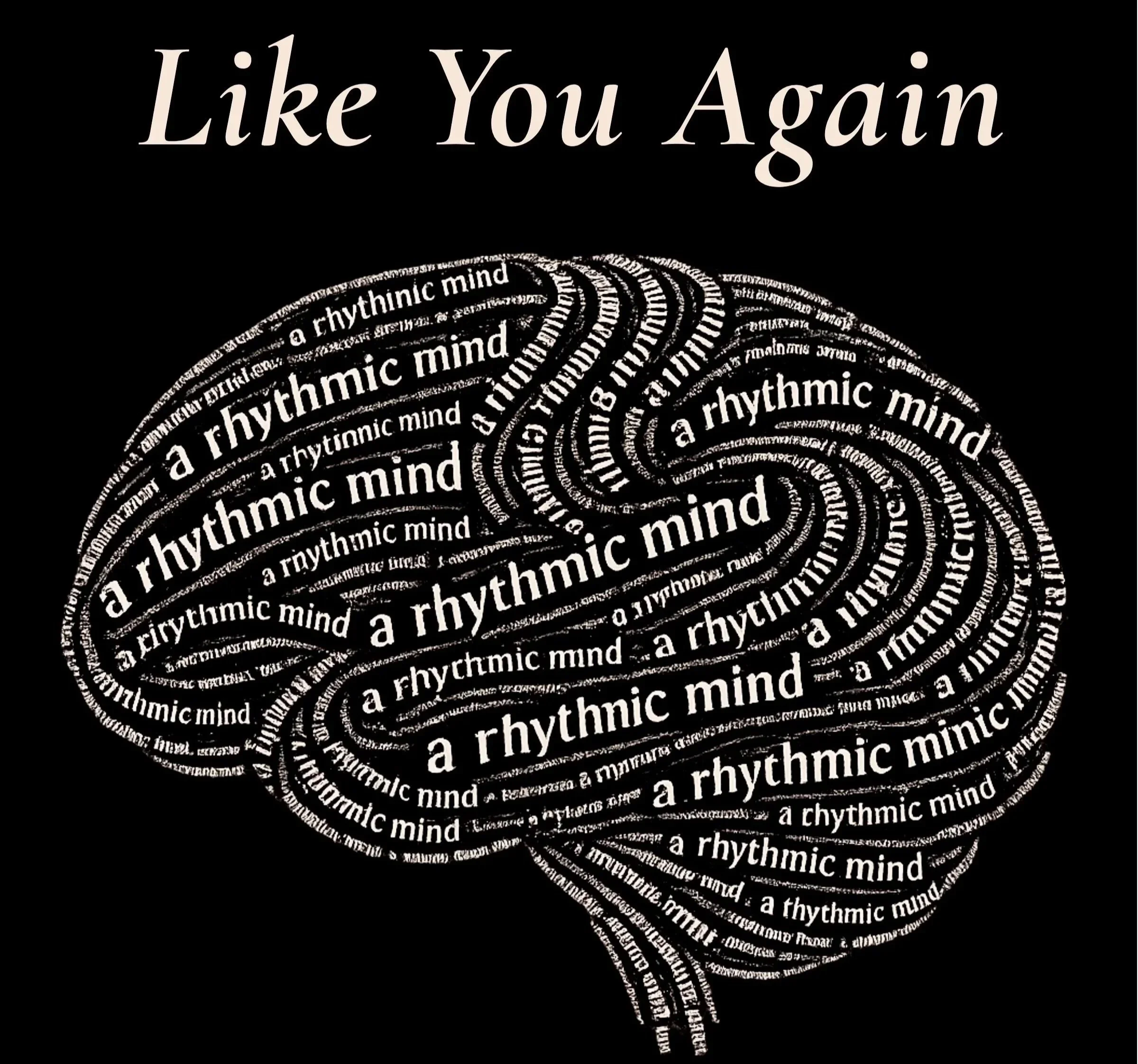 Image 3 of 3
Soft back copy. A physical reference for understanding and restoring timing in daily life. Includes shipping and handling.
The fog. The hesitation. The confusion. The subtle sense that you are running half a beat behind your own life.
For many people, cognitive decline does not begin dramatically. It begins quietly — in missed words, slower reading, awkward movement, diminished confidence. After concussion, illness, stress, stroke, or simply age, something fundamental feels altered. Not intelligence. Not personality. Something deeper.
Timing.
In Like You Again, Erskine Maytorena introduces a new concept: Timing Identity Collapse — the idea that when the brain's internal timing mechanisms falter, the structures built on top of them begin to destabilize.
Reading slows. Reactions hesitate. Memory fragments. Movement feels uncertain. Gradually, the sense of self begins to shift.
Drawing from neuroscience research on temporal processing, predictive coding, and sensory integration — along with his own documented recovery from neurological disruption — Maytorena argues that timing is not a minor skill but a foundational neural substrate. The invisible architecture beneath cognition, coordination, and identity.
Many people are told their symptoms are psychological, stress-related, or "just aging." Standard evaluations often miss millisecond-level timing disruptions that fall below diagnostic thresholds yet still affect reading fluency, speech pacing, motor coordination, emotional regulation, and decision speed.
Instead of asking, 'What's wrong with me?' this book invites a more precise question: 'What has shifted in my internal timing?'
The book includes a 28-day timing recalibration program built around validated cortical metrics — not vague lifestyle advice, but measurable changes in how the brain processes time.
For people who have spent months or years being told nothing is wrong, that loss accumulates. Confidence erodes. Relationships strain. Work suffers. The person you were before begins to feel like someone you used to know.
If you have felt not broken, but off — not incapable, but mistimed — what feels like losing yourself may simply be losing tempo.
And tempo can be trained.
Soft back copy. A physical reference for understanding and restoring timing in daily life. Includes shipping and handling.
The fog. The hesitation. The confusion. The subtle sense that you are running half a beat behind your own life.
For many people, cognitive decline does not begin dramatically. It begins quietly — in missed words, slower reading, awkward movement, diminished confidence. After concussion, illness, stress, stroke, or simply age, something fundamental feels altered. Not intelligence. Not personality. Something deeper.
Timing.
In Like You Again, Erskine Maytorena introduces a new concept: Timing Identity Collapse — the idea that when the brain's internal timing mechanisms falter, the structures built on top of them begin to destabilize.
Reading slows. Reactions hesitate. Memory fragments. Movement feels uncertain. Gradually, the sense of self begins to shift.
Drawing from neuroscience research on temporal processing, predictive coding, and sensory integration — along with his own documented recovery from neurological disruption — Maytorena argues that timing is not a minor skill but a foundational neural substrate. The invisible architecture beneath cognition, coordination, and identity.
Many people are told their symptoms are psychological, stress-related, or "just aging." Standard evaluations often miss millisecond-level timing disruptions that fall below diagnostic thresholds yet still affect reading fluency, speech pacing, motor coordination, emotional regulation, and decision speed.
Instead of asking, 'What's wrong with me?' this book invites a more precise question: 'What has shifted in my internal timing?'
The book includes a 28-day timing recalibration program built around validated cortical metrics — not vague lifestyle advice, but measurable changes in how the brain processes time.
For people who have spent months or years being told nothing is wrong, that loss accumulates. Confidence erodes. Relationships strain. Work suffers. The person you were before begins to feel like someone you used to know.
If you have felt not broken, but off — not incapable, but mistimed — what feels like losing yourself may simply be losing tempo.
And tempo can be trained.